Tutorial of RiceVarMap v3.0
For the best experience, use an up-to-date version of Chrome, Firefox, Safari, or Edge.
License
RiceVarMap V3.0 annotation and prediction datasets are free for research use. You may query, download and use them in your own analyses and publications, citing RiceVarMap V3.0. You may not redistribute these datasets, in whole or in substantial part, in another database, web service, software package or data bundle, nor mirror them; please direct users to https://ricevarmap.ncpgr.cn/v3/download/. Contact the RiceVarMap team for commercial use or for permission beyond these terms.
- How to search for variations by region?
- How to search for variations in a gene?
- How to search genotype with variation ID?
- How to search for polymorphic positions between two cultivars?
- How to search for variation information with variation ID?
- How to search cultivar information?
- How to search phenotype information?
- How to design primer by using RiceVarMap?
- How to do haplotype network analysis?
- How to convert IDs / coordinates across reference genomes?
- Updated variant resources and annotations in RiceVarMap3
- Deep-learning–based regulatory variant prioritization
- Population differentiation analysis
- RAG-based intelligent natural language query
- How to browse genomic tracks in JBrowse?
- How to access RiceVarMap3 through the REST API?
RiceVarMap3 is developed as an upgraded version of RiceVarMap v2, inheriting its core query framework and widely used analysis modules. The classic functions, including Search for Variation by Region, Search for Variation in Gene, and Search for Genotype With Variation ID, remain fully supported. In addition, essential tools such as Design Primer by Region, Design Primer by Variation ID, Haplotype Network Analysis, and regulatory variant scoring modules are preserved and further optimized.
Compared with previous versions, RiceVarMap3 significantly expands variation resources by integrating multi-reference genomic datasets. Variant sites for Nipponbare (NIP; IRGSP-1.0) are derived from the 4K variation dataset, while variant sites for MingHui63 (MH63) and ZhenShan97B (ZS97) are derived from the 3K variation dataset. This multi-reference design enables consistent variant querying, annotation, and comparison across both japonica and indica reference genomes.
RiceVarMap3 integrates large-scale rice variation resources across multiple reference genomes. Specifically, the database includes variant calls for three representative cultivars: Nipponbare (NIP; IRGSP-1.0) based on the 4K dataset, and MingHui63 (MH63; indica) plus ZhenShan97B (ZS97; indica) based on the 3K dataset. Together, these datasets provide a comprehensive catalog of SNPs and small INDELs for multi-reference variant browsing and downstream analysis.
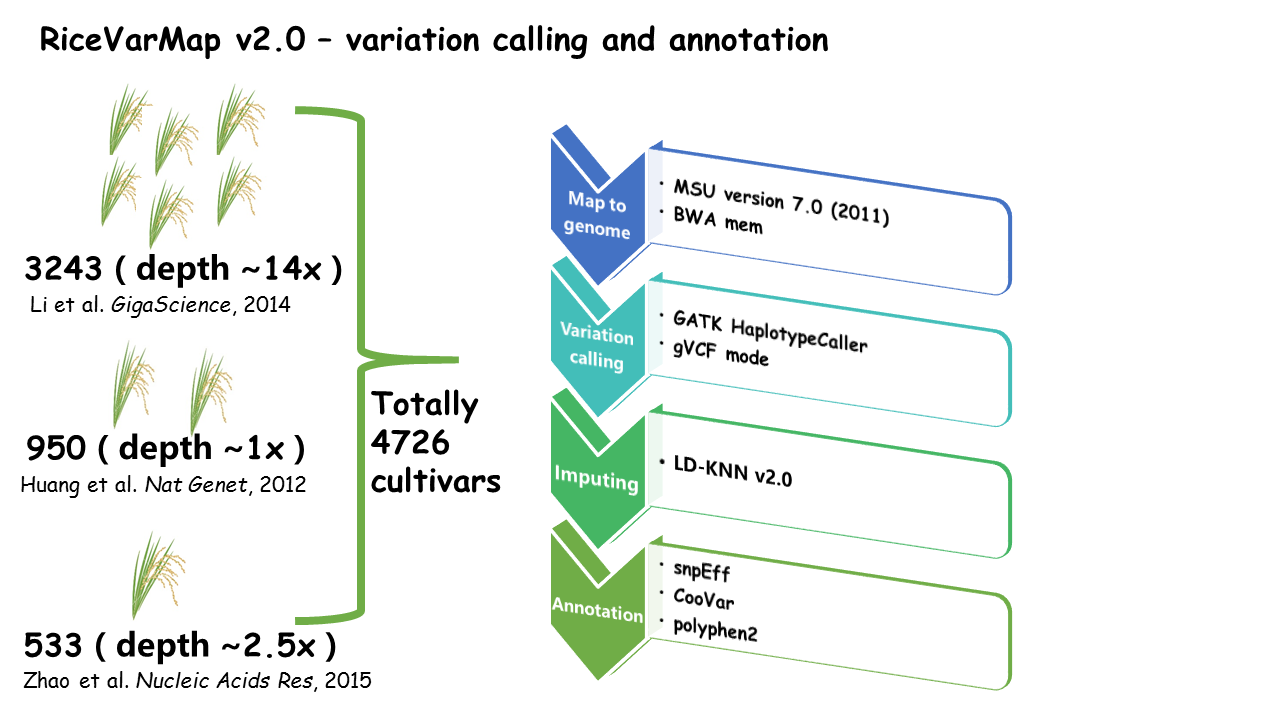
RiceVarMap3 also introduces enhanced functional annotation pipelines. For coding variants, updated consequence annotations and multiple protein-impact predictors are integrated to improve interpretation accuracy. For non-coding variants, the platform incorporates chromatin accessibility signals and deep-learning–based sequence-to-regulatory prediction models trained on multi-tissue datasets, enabling tissue-specific regulatory effect estimation and prioritization of high-impact regulatory variants. Furthermore, new modules for population differentiation analysis and selection signal exploration provide population-aware functional insights.
In addition, RiceVarMap3 introduces an intelligent natural language interface based on retrieval-augmented generation (RAG), which can automatically parse user queries, extract parameters (e.g., genes, genomic regions, populations), and route requests to the corresponding functional modules. Background of data collection, processing, and evaluation can be found in the Notes and Data Evaluation page.
1. How to search for variations by region? top
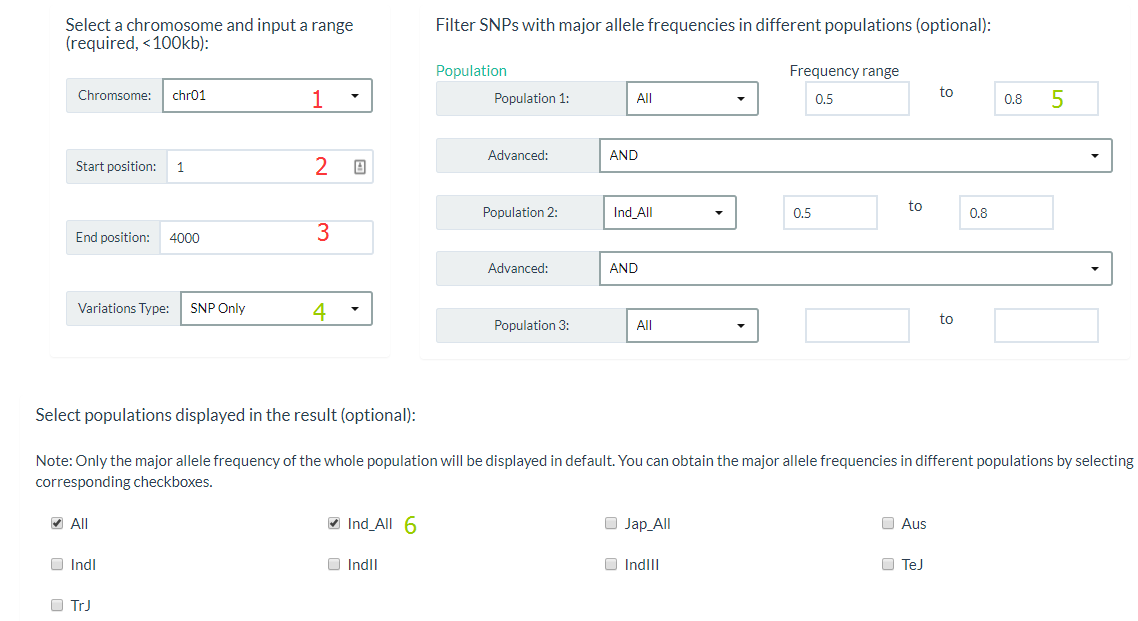
You can click this link, specify a chromosome and input a range (required), and also you can filter Variations by major allele frequencies (optional). For results display, you can select only output SNP or INDEL and populations major allele frequencies in this region.
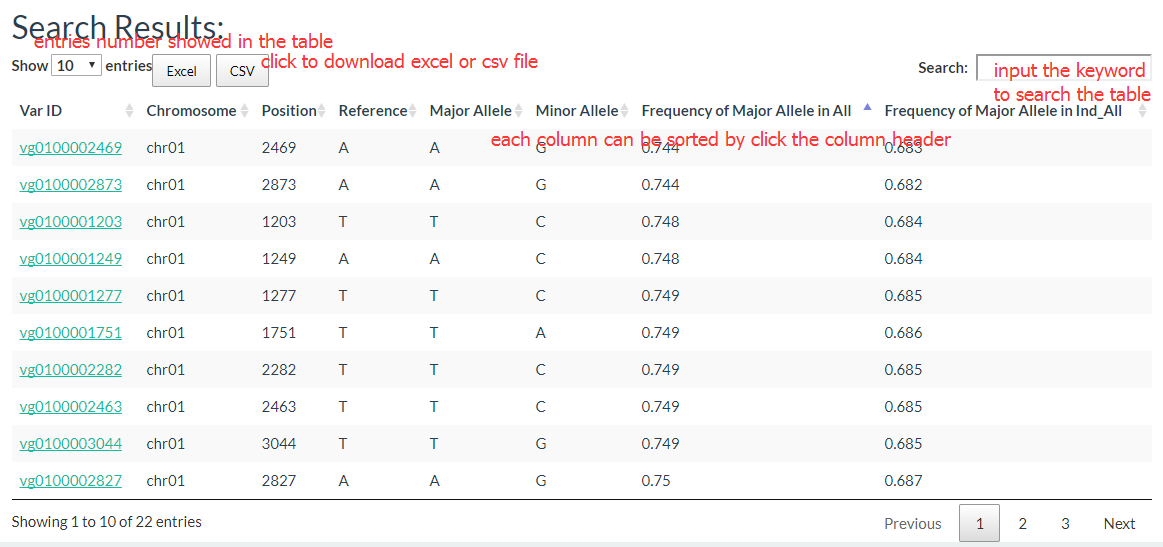
The results show like this:
2. How to search for variations in a gene? top
You can click this link, and enter one gene Loci or gene symbol (e.g. LOC_Os01g01070), and to search for variation in upstream or downstream regions, enter the distance upstream or downstream of the gene (e.g., 0.5 kb upstream, 0.2 kb downstream, optional).
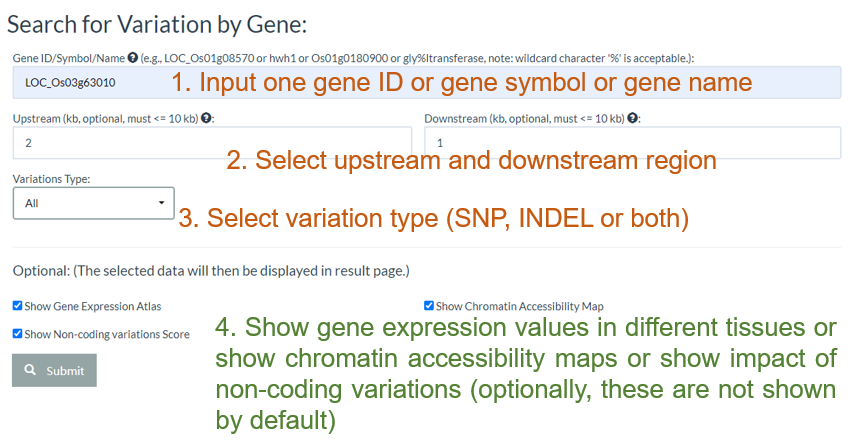
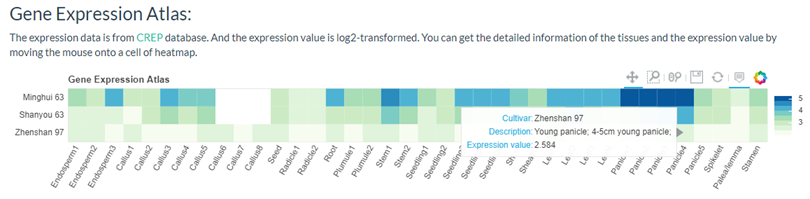
You can get a gene expression heatmap if selected 'Show Gene Expression Atlas'.
Select Show Chromatin Accessibility Map to explore the Nipponbare (IRGSP-1.0) chromatin accessibility landscape across 24 tissue/developmental contexts. Use the tissue checkboxes and Quick select options to choose which contexts are displayed. The example below shows four selected contexts: Root, Leaf, Stem and Panicle1.

The current Show Chromatin Accessibility Map option displays an integrated chromatin accessibility landscape. It combines tissue-resolved ATAC-seq signals with Basenji-predicted effects of non-coding variants across the queried region. Each point represents a non-coding variant: positive scores indicate predicted increases in accessibility and negative scores indicate predicted decreases. Light-red five-point stars indicate high-impact regulatory variants (HEVs), while red five-point stars indicate strong HEVs.
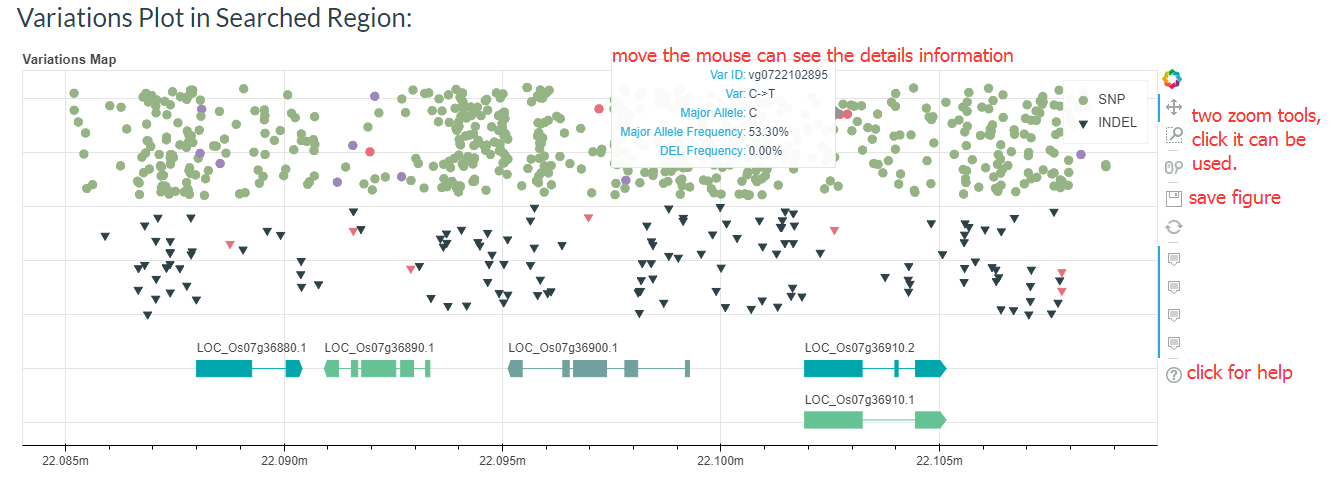
You can also find the regional variant map. You can click on the points in the map to go to the detailed variation information page.
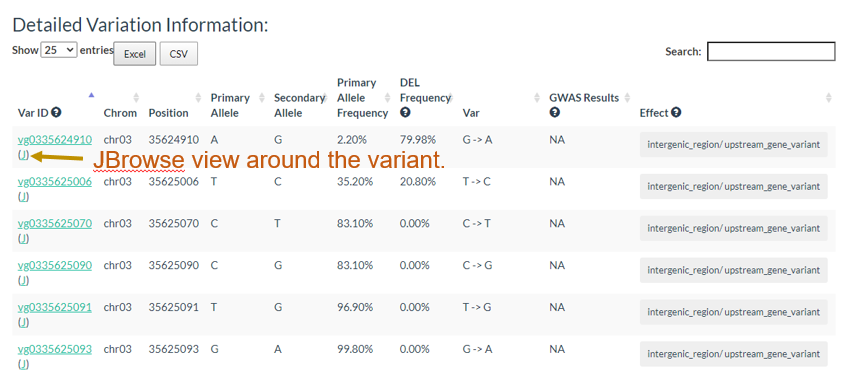
The results table can also be sorted and searched.
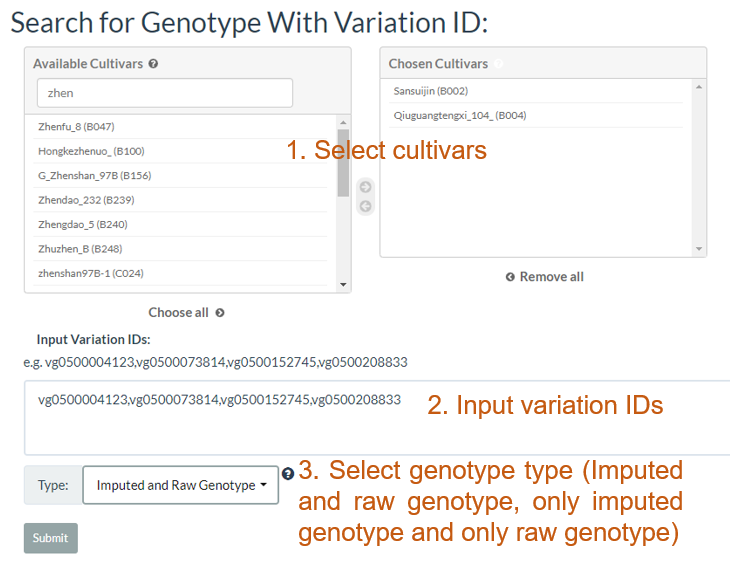
3. How to search genotype with variation ID? top
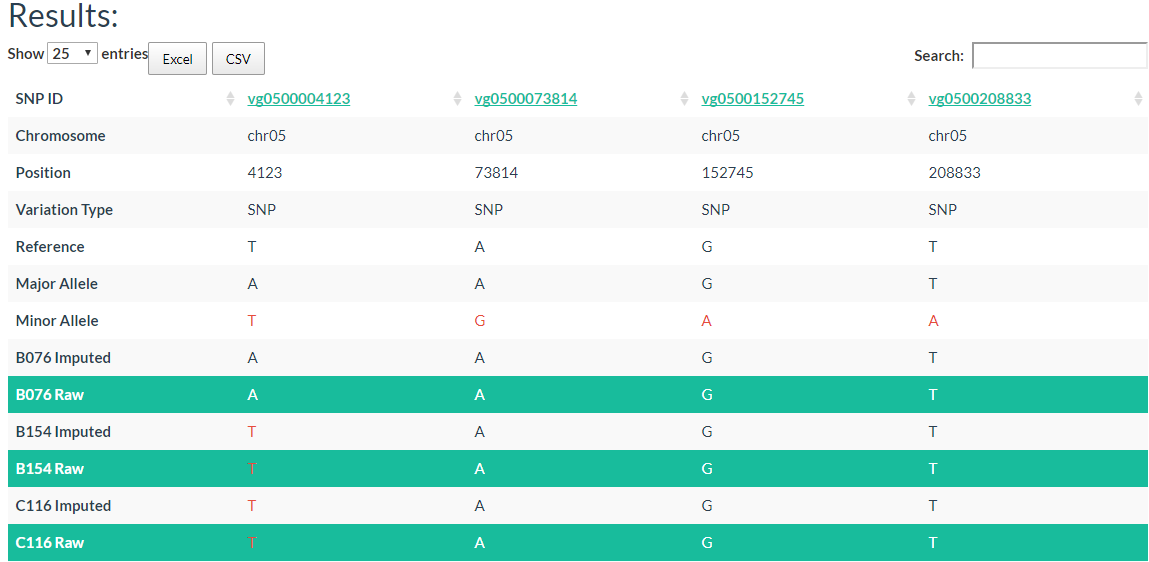
In the table, each column represents one variant. The table contains chromosome, locus, variant type (SNP/INDEL), reference allele, major allele, and minor allele information. An allele in red indicates a minor allele, and a background color in green indicates a raw genotype (not imputed).
4. How to search for polymorphic positions between two cultivars? top
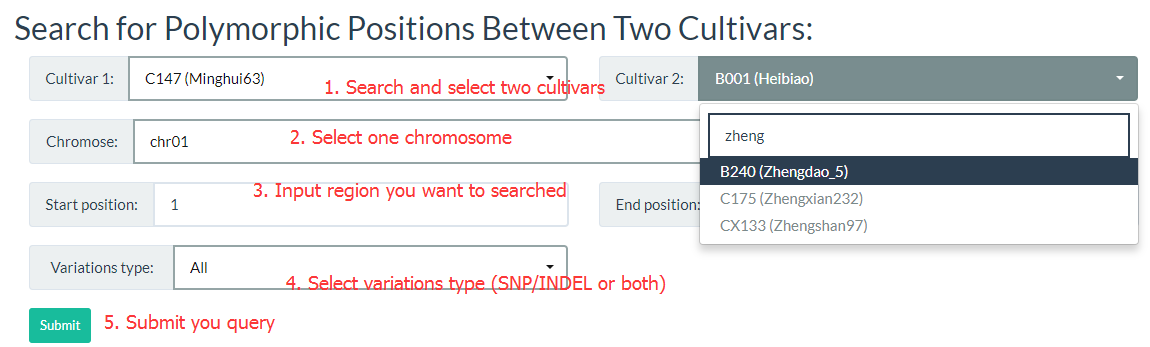
By entering keywords, you can search for cultivars and reduce selection time. The detailed steps are shown in the figure below.
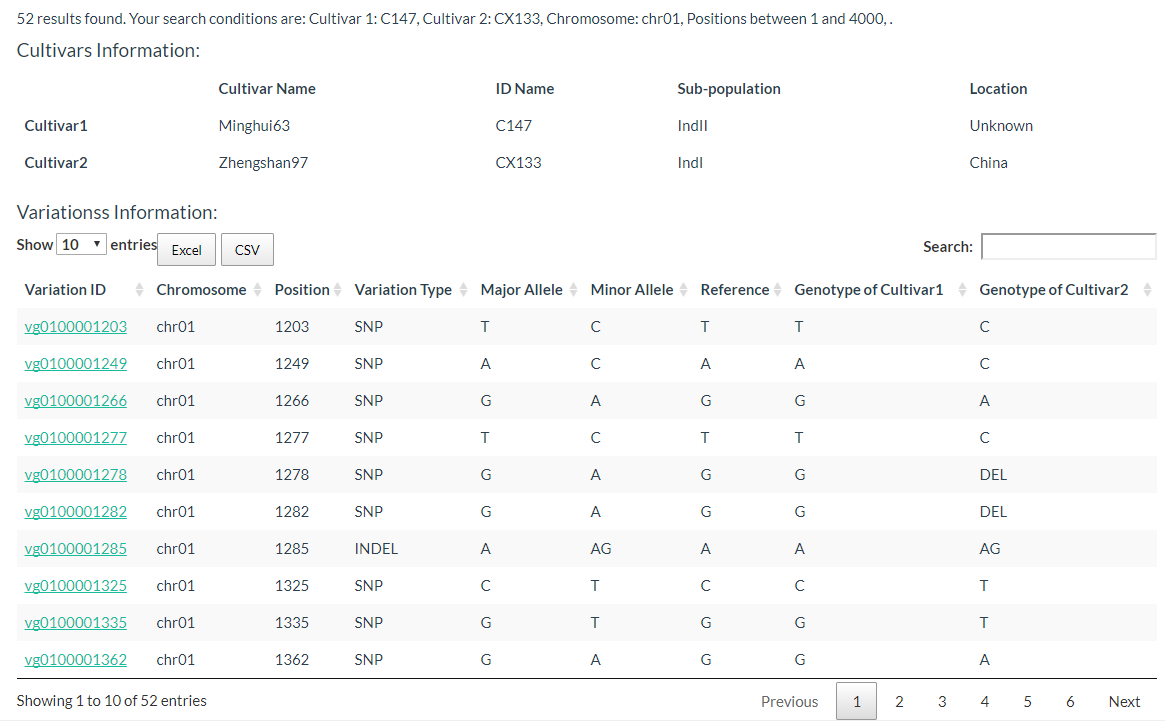
The results are presented in two tables, the first table include cultivar information, which includes cultivar name, ID name in the database, subpopulation information, and location information. The second table contains the genotypes of the two selected cultivars.
5. How to search for variation information with variation ID? top
In this link, you just need to enter one variation ID to get the result.
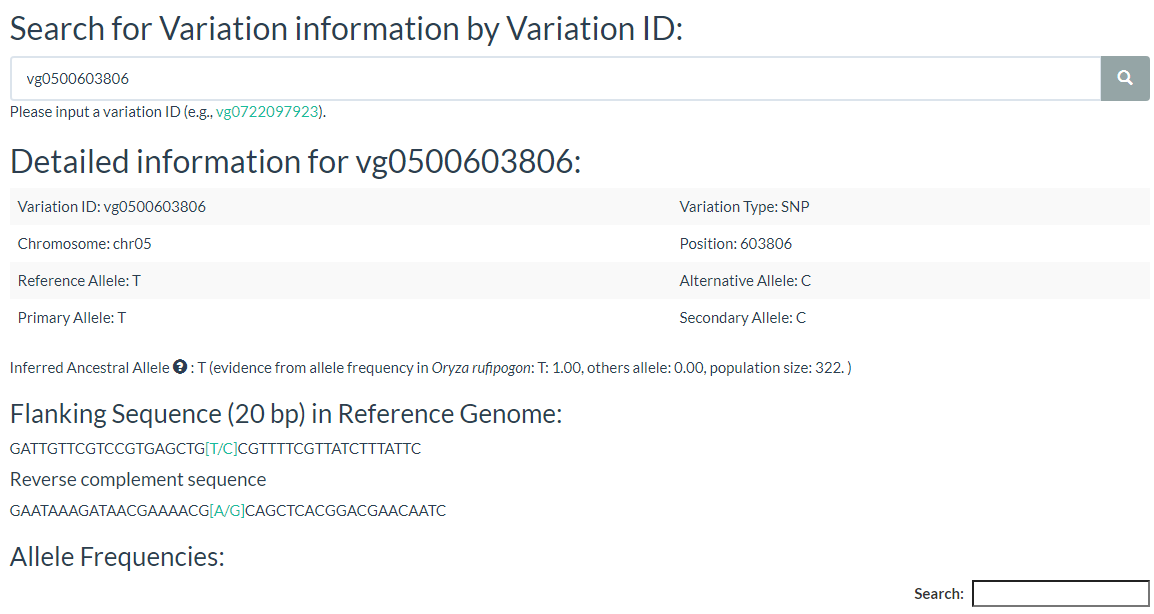
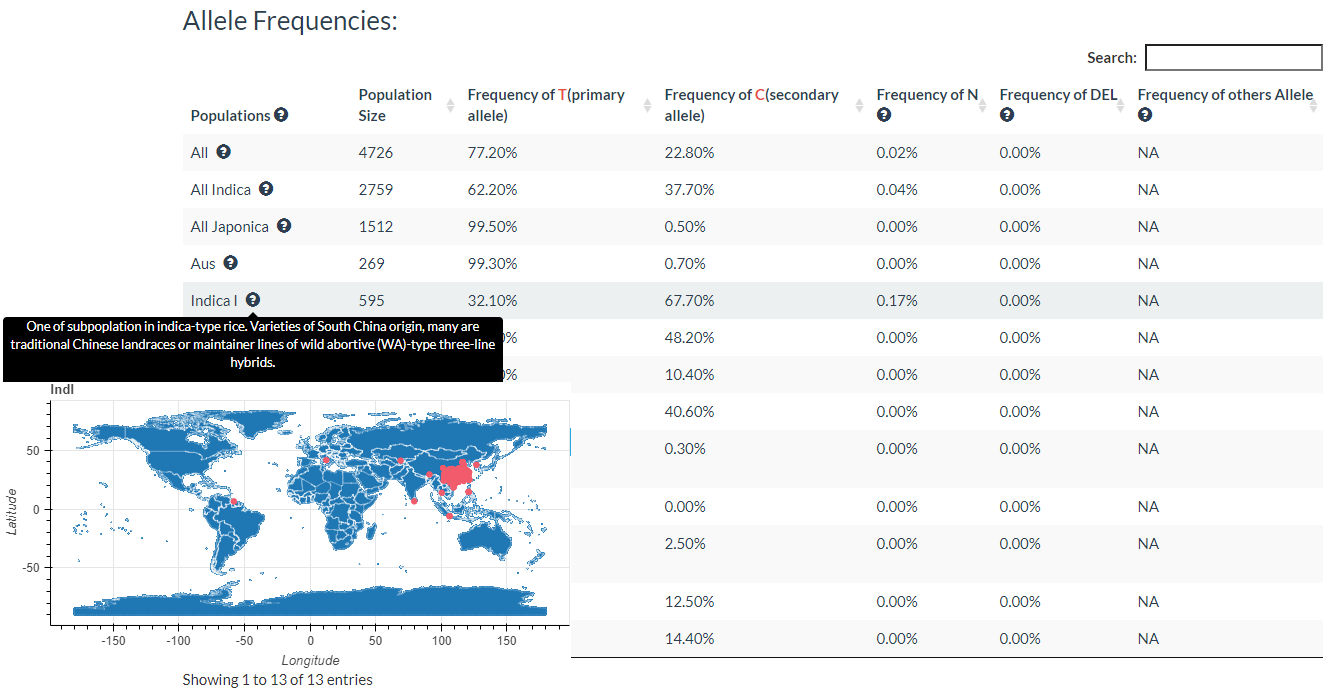
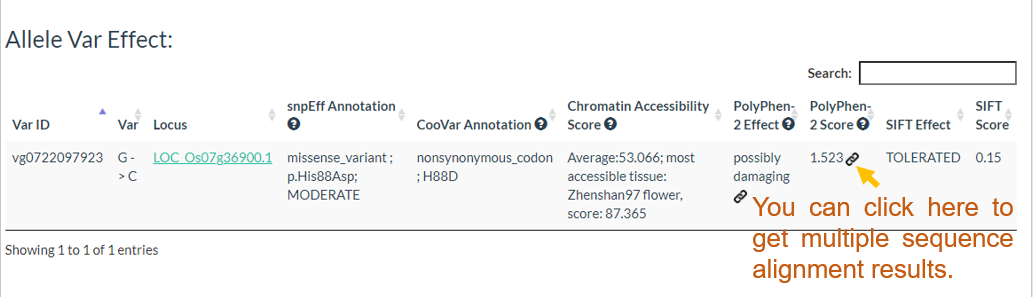
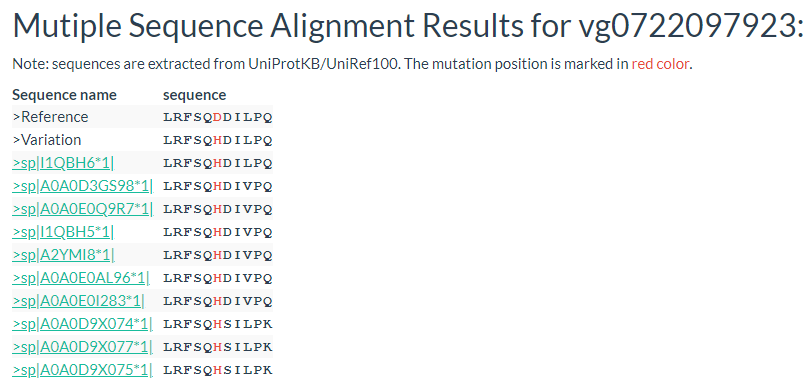

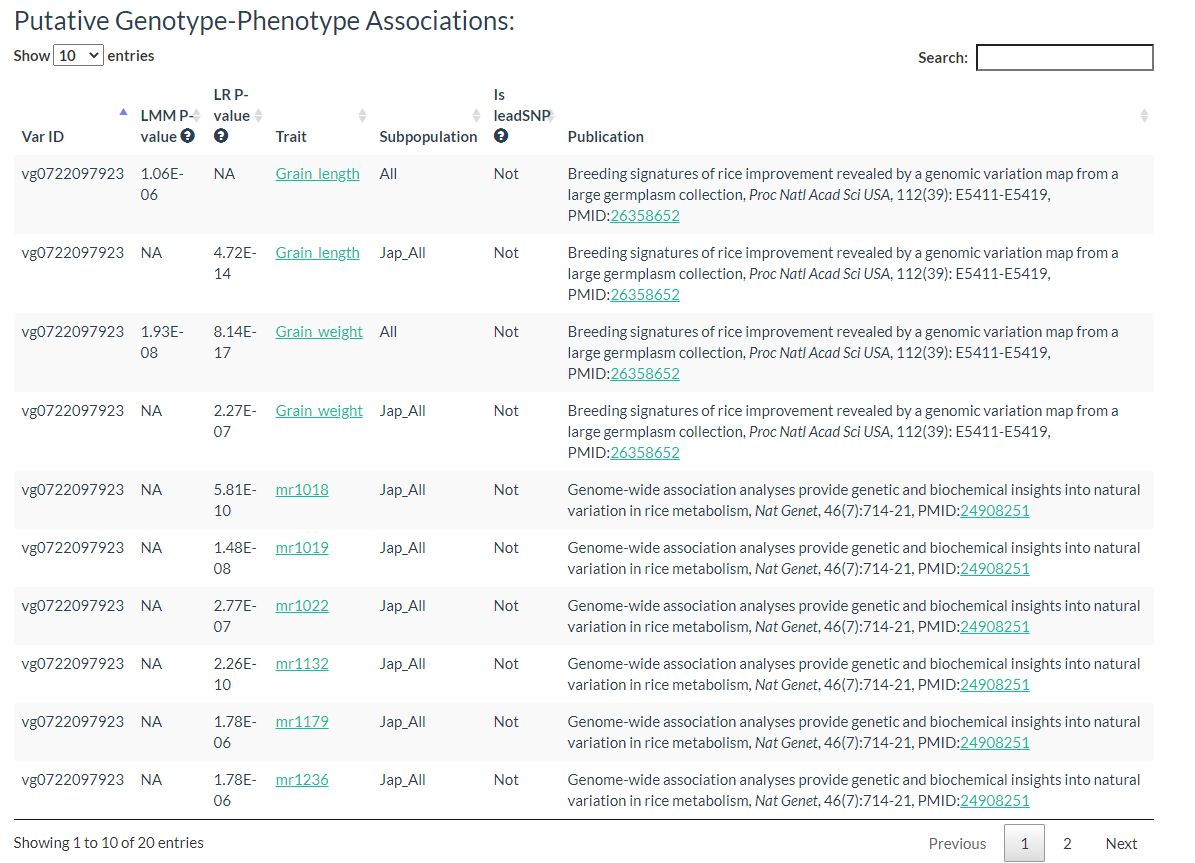
Results include 100 bp upstream and 100 bp downstream flanking sequences from the selected reference genome, allele frequencies for each population, predicted effects of the variation, and GWAS results for the variation. For variants with a reliable Nipponbare coordinate, use Open in JBrowse beside Primer Design to inspect the locus together with gene, variant, ATAC-seq, and RNA-seq tracks.
6. How to search cultivar information? top
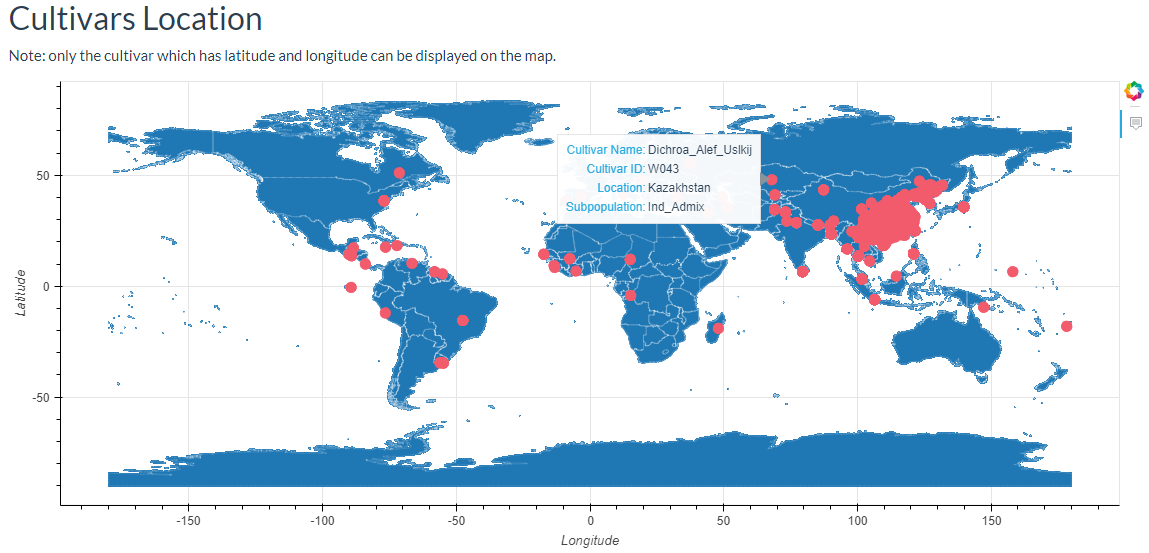
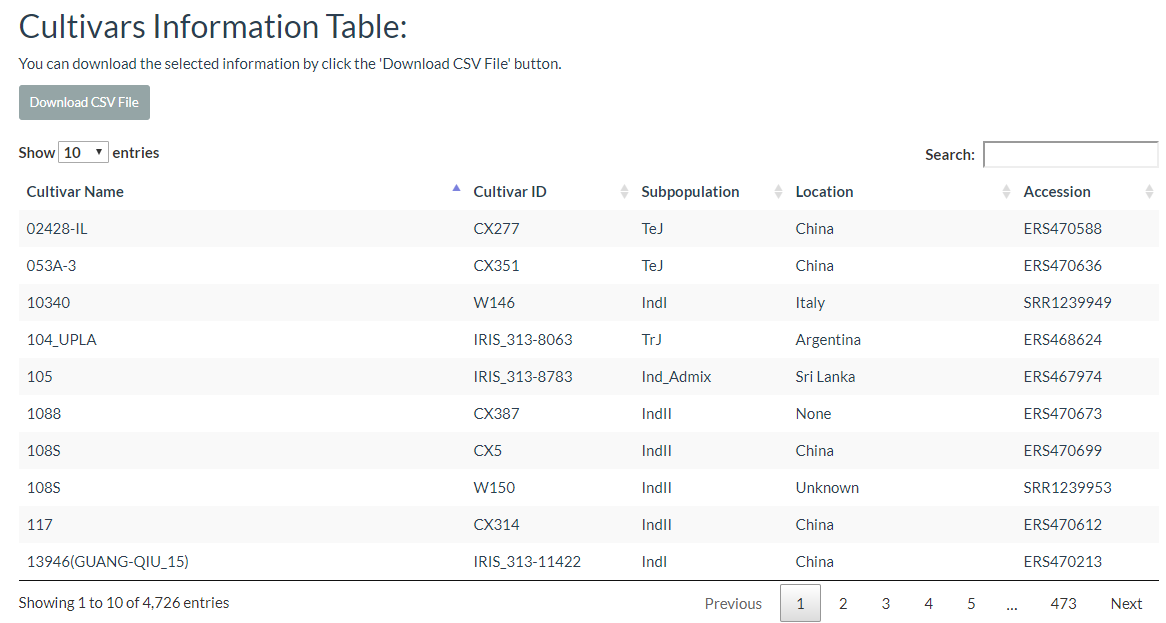
In this link, cultivars can be selected and the results will output the cultivars location image and the detailed information table.
7. How to search phenotype information? top
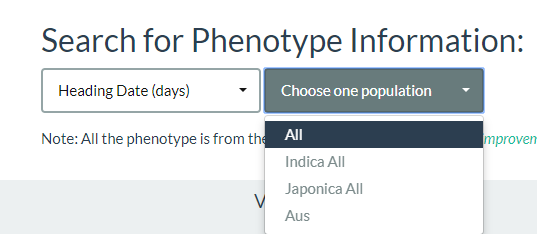
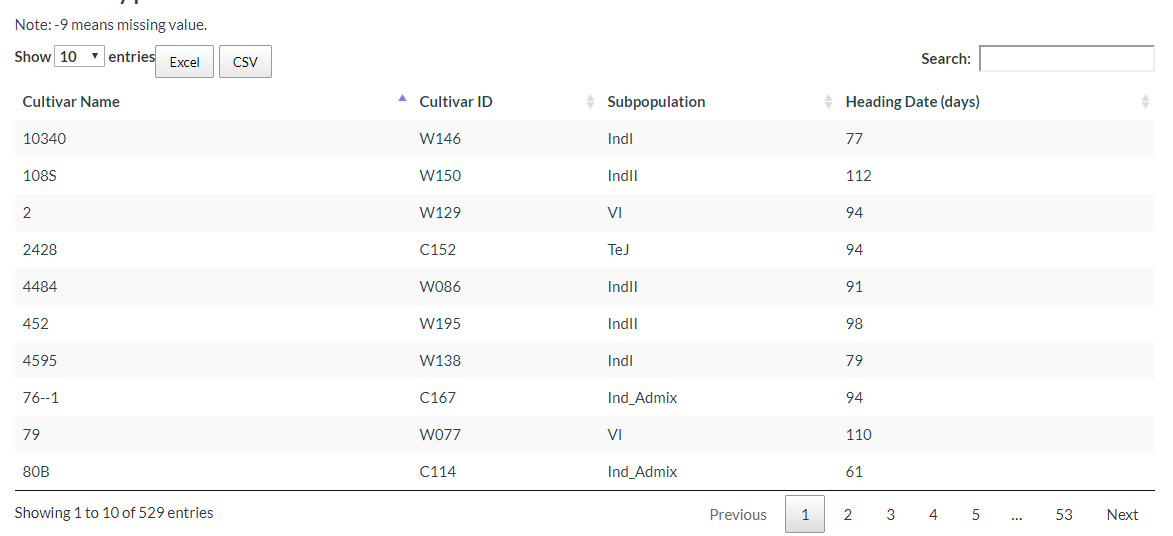
Open the Phenotype Search page to explore phenotypic and GWAS resources spanning eight studies, including six newly incorporated datasets. In the Phenotype module, select a standardized trait, then choose the relevant study and population or analysis, including the location, year and treatment where available. Results show the phenotype distribution and accession-level measurements; samples with missing values for the selected phenotype are omitted. The corresponding study reference is displayed with the results.
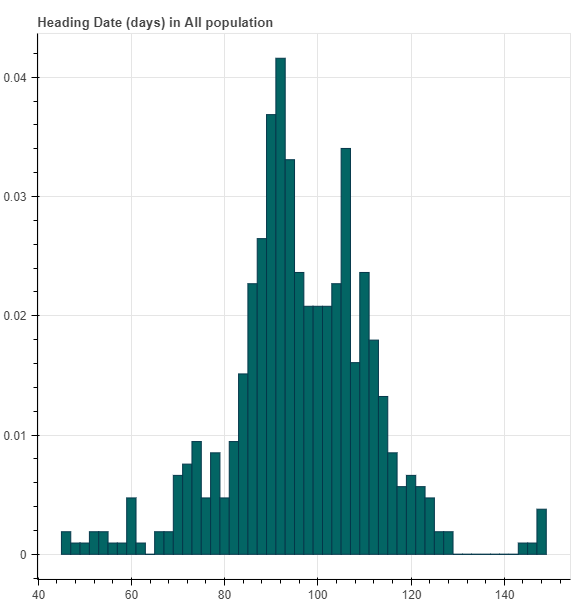
For each phenotype, we first draw a histogram of the phenotype distribution.
Phenotype information sheets for each cultivar are also available for download.
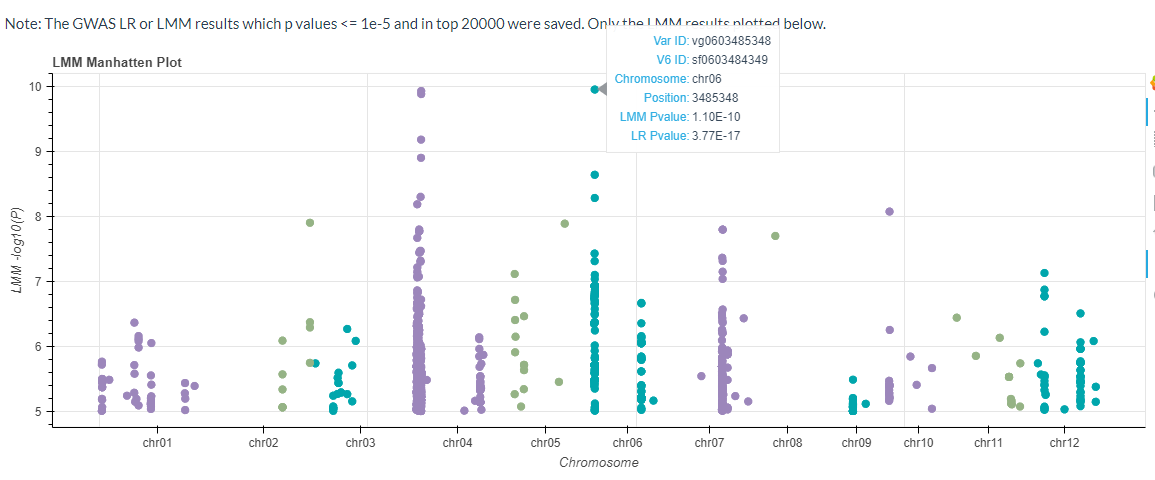
Switch to the GWAS module to select an agronomic or metabolic trait and its study-specific population or analysis. The original results from Xie et al. (2015) and Chen et al. (2014) retain their existing coverage and methods. For these legacy results, the plot shows LMM results retained under the original P-value or ranking criteria. The six additional datasets provide curated peak-SNP associations linked to functionally characterized genes from RiceNavi and Wei et al. (2021), Supplementary Dataset 3, rather than full genome-wide association scans. Study, population and environment information is retained for each analysis. Click a variant or gene identifier in the result table to open its corresponding RiceVarMap record.
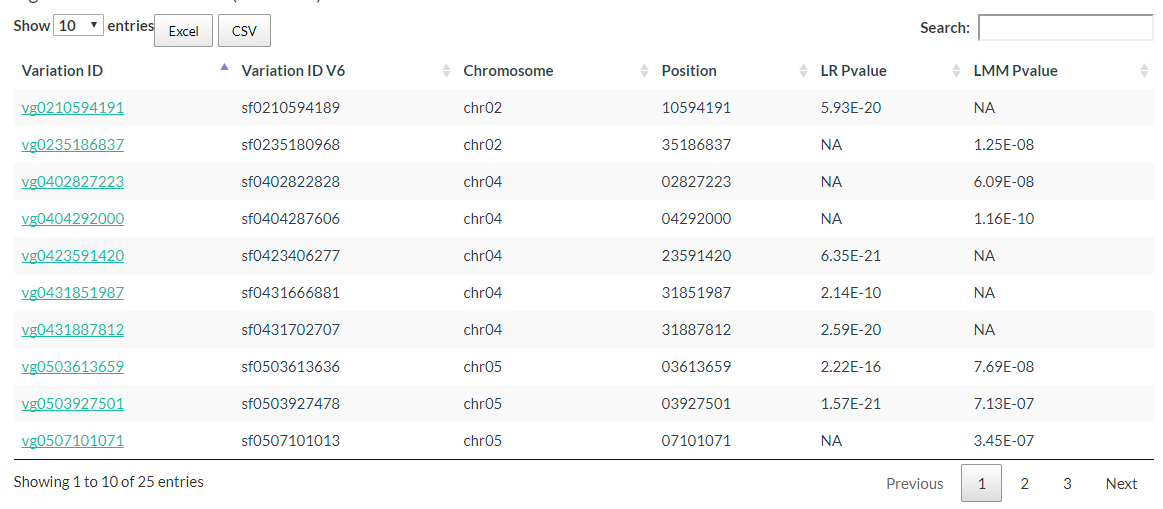
The Significant Candidate Loci information can also be downloaded.
8. How to design primer by using RiceVarMap? top
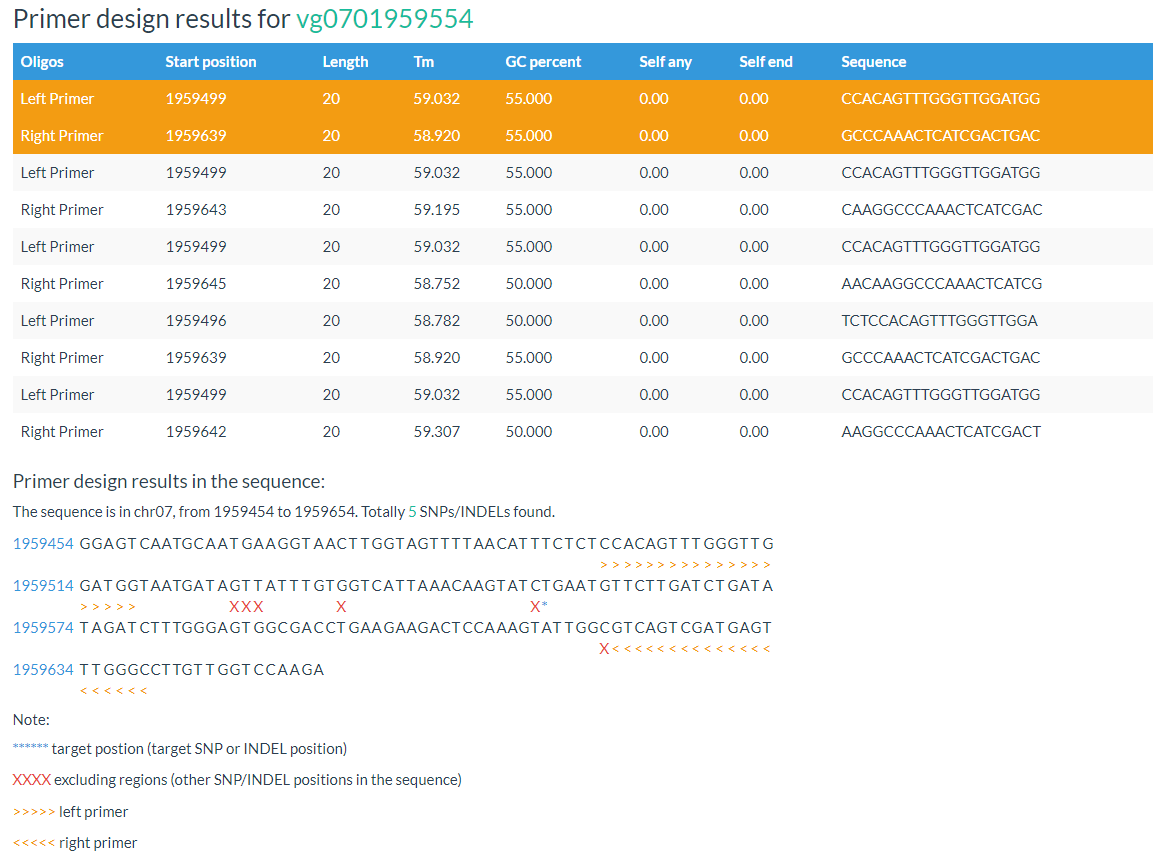
The 'Design Primer by Variation ID' is designed to allow researchers to select PCR-primers to validate SNPs/INDELs or develop molecular markers. The 'Design Primer by Region' is designed to allow researchers to select PCR-primers to amplify genomic regions to avoid overlap with known SNPs/INDELs. They all use Primer3 as a backend engine.
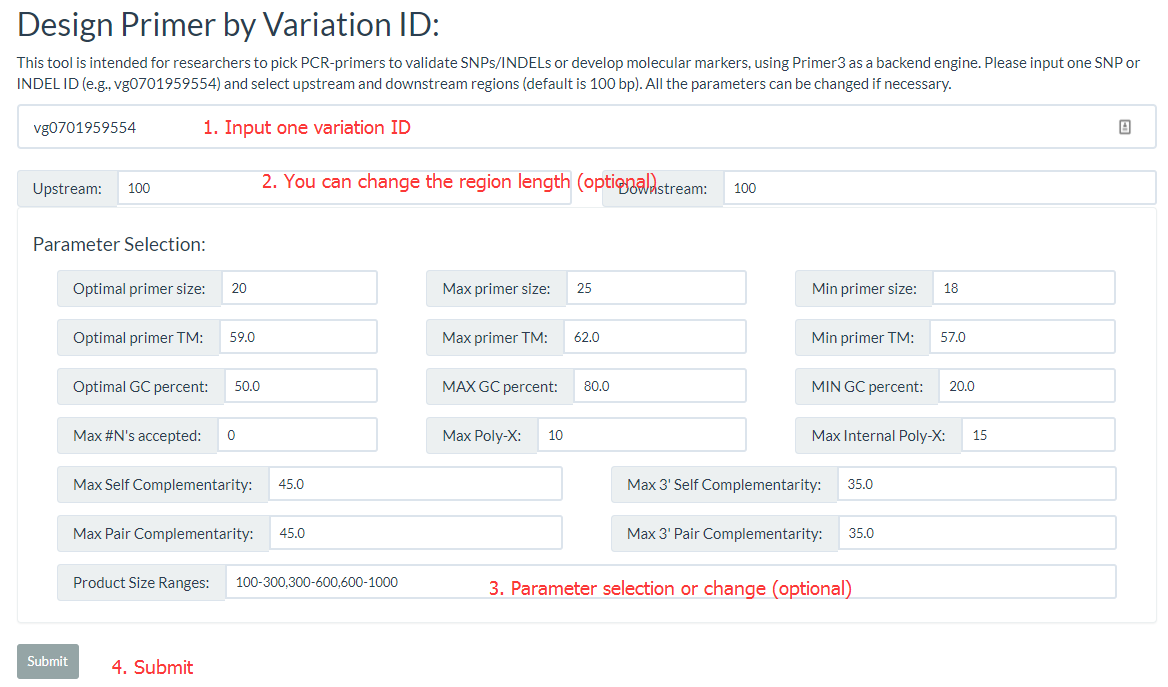
Both primer positions and variation positions are indicated in the results.
9. How to do haplotype network analysis? top
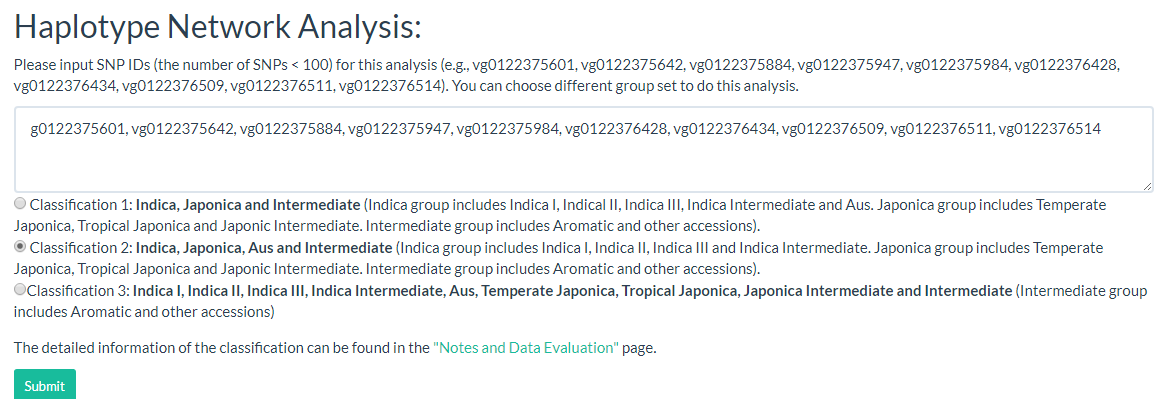
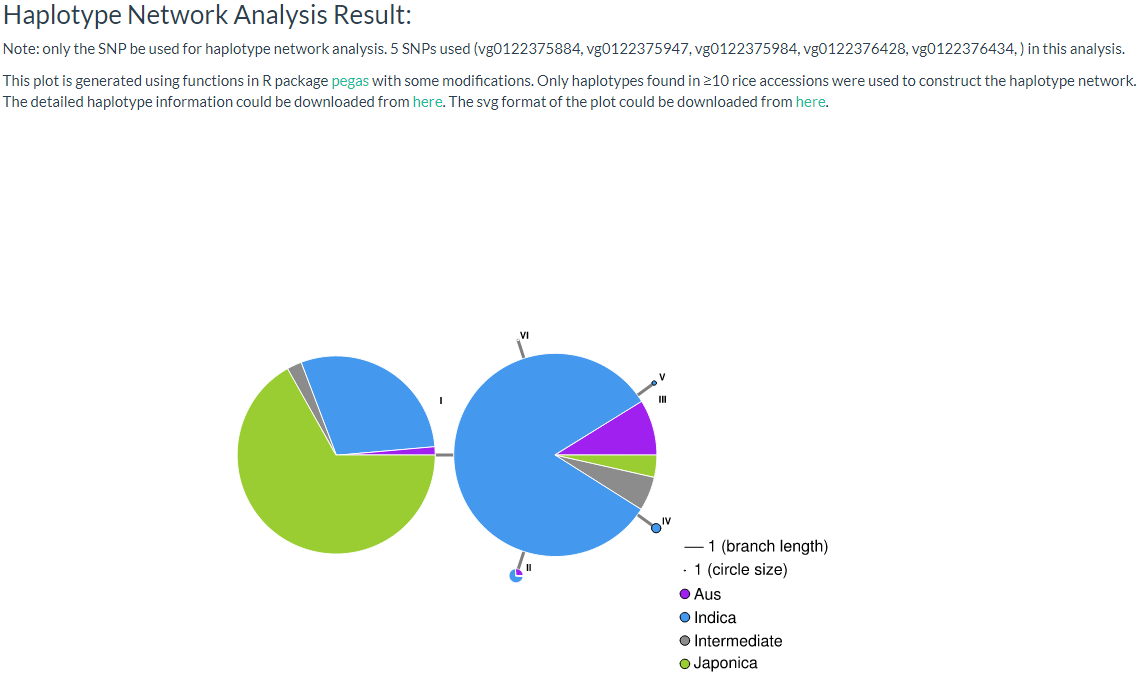
Haplotype networks are frequently used for population genetic analysis, and in this page we can enter the selected variant ID (must be SNP, INDEL will be filtered out) and select a population category for haplotype analysis. The user can download CSV and SVG files for further analysis (the page link).
10. How to convert IDs / coordinates across reference genomes? top
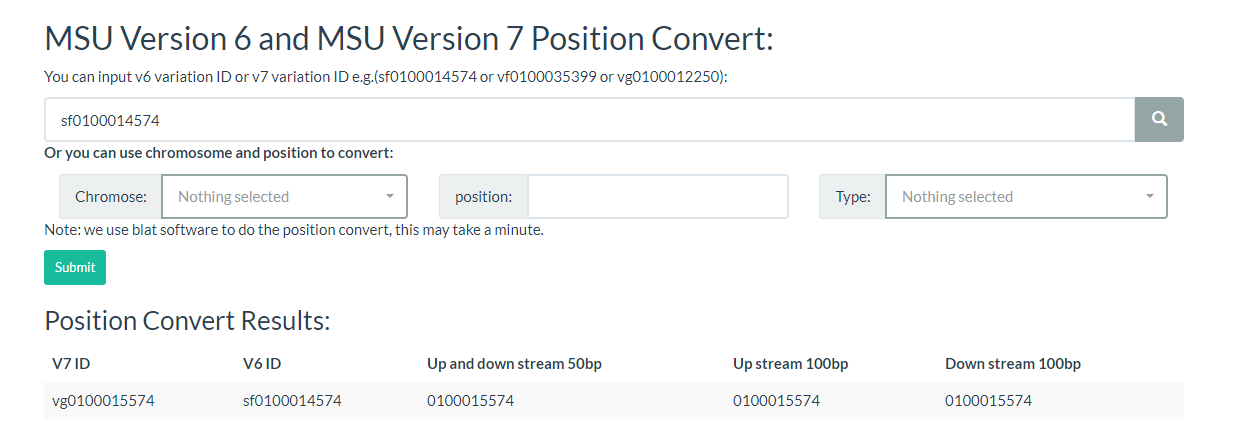
RiceVarMap3 supports coordinate/ID conversion across multiple rice reference genomes (e.g., NIP / MH63 / ZS97). On the conversion page, you can enter a variant ID or a chromosome location to convert the locus to homologous positions in other references (if available).
11. Updated variant resources and annotations in RiceVarMap3 top
RiceVarMap3 significantly expands both data resources and annotation layers. The database integrates variation datasets from multiple representative reference genomes (e.g., Nipponbare/NIP as a japonica reference, MingHui63/MH63 and ZhenShan97B/ZS97 as indica references), enabling cross-reference exploration and analysis.
RiceVarMap3 also updates functional annotation workflows. In addition to classical consequence annotation (e.g., gene model–based consequence categories), RiceVarMap3 integrates updated pipelines for coding consequence prediction and protein impact estimation, and provides standardized outputs aligned to the selected gene annotation versions (e.g., RAP-based annotations where applicable).
12. Deep-learning–based regulatory variant prioritization top
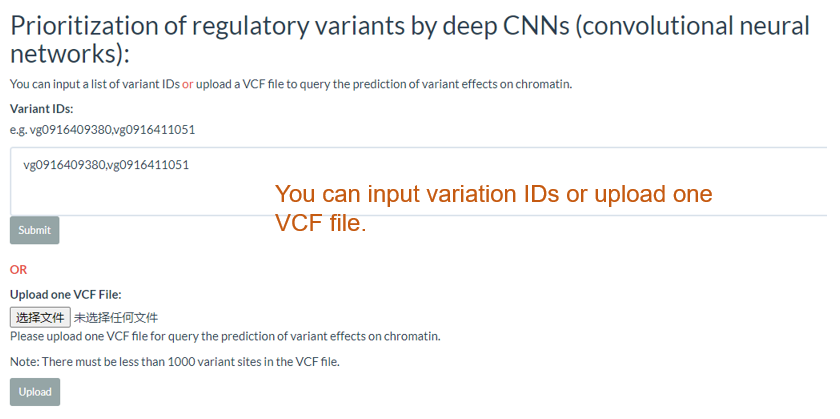
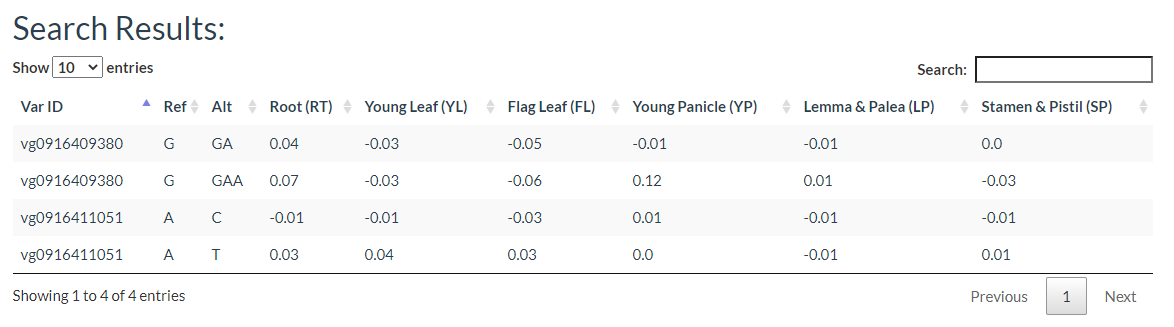
To interpret noncoding variation, RiceVarMap3 integrates deep-learning models trained on multi-tissue chromatin accessibility profiles across cultivars. These models estimate the direction and magnitude of regulatory effects for candidate variants and help prioritize high-impact regulatory variants.
You can typically input a list of variant IDs or upload a VCF file to query predictions on chromatin accessibility or other configured regulatory tracks. Results include tissue-specific effect scores, interactive accessibility profiles, and local gene model context to support mechanistic interpretation.

13. Population differentiation analysis top
RiceVarMap3 provides population genetics modules for investigating population differentiation and potential selection signals. Users can select populations/subgroups and genomic windows to compute and visualize statistics such as FST and nucleotide diversity (π), and to compare differentiation patterns between population pairs.
This module is particularly useful when combined with functional annotations and regulatory variant prioritization results, enabling population-aware interpretation of candidate loci and variants.
14. RAG-based intelligent natural language query top
RiceVarMap3 introduces an intelligent natural language interface powered by retrieval-augmented generation (RAG). The assistant parses user input, classifies the intent (e.g., region search, gene query, population analysis, regulatory scoring), extracts parameters (gene IDs, coordinates, populations, thresholds), and routes the request to the corresponding functional pages.
In addition, the assistant can provide concise explanations of outputs and suggest follow-up analysis steps based on the built-in knowledge base and the current query context.
15. How to browse genomic tracks in JBrowse? top
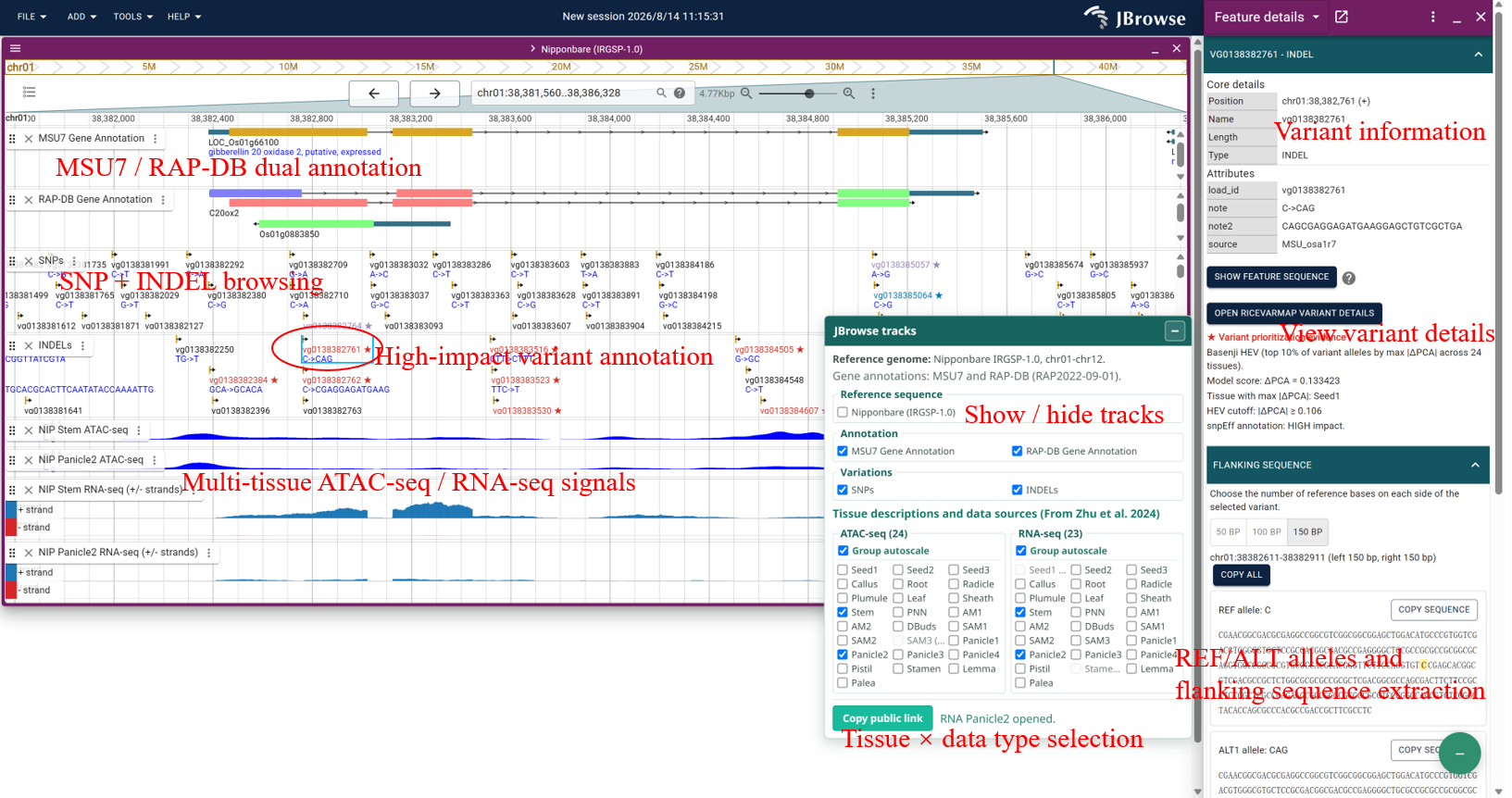
Open JBrowse to examine a Nipponbare (IRGSP-1.0) genomic region in an interactive genome browser. The default view provides MSU7 and RAP-DB gene annotations together with SNP and INDEL tracks. Use the JBrowse tracks panel to show or hide tracks, enable group autoscaling, and select among 24 ATAC-seq and 23 RNA-seq tissue tracks.
Click a variant feature to open its details panel. This panel displays the position, alleles, functional annotation, regulatory-prioritization summary, and reference/alternate flanking sequences. Open RiceVarMap variant details returns to the full RiceVarMap3 variant report. Use Copy public link when you need a reproducible browser view for sharing or citation.
16. How to access RiceVarMap3 through the REST API? top
The REST API documentation provides executable
examples and the current request/response contract for programmatic, read-only access to
RiceVarMap3. The API supports reference and population metadata, cultivar lookup, single and batch
variant queries, region queries, gene lookup, coordinate conversion, primer design, and genotype
queries. Coordinates are 1-based and chromosome names use chr01 through
chr12.
Start with the documented base URL https://ricevarmap.ncpgr.cn/v3/api. Most lookups
use HTTP GET query parameters, while batch or structured requests use JSON POST bodies. Responses
use the consistent ok, data, meta, and error
envelope; consult the API documentation for supported references,
limits, examples, and endpoint-specific fields.
curl -s 'https://ricevarmap.ncpgr.cn/v3/api/variants/vg0100001306?include=basic,frequency&population=All'
Updated: 2026/08/26